
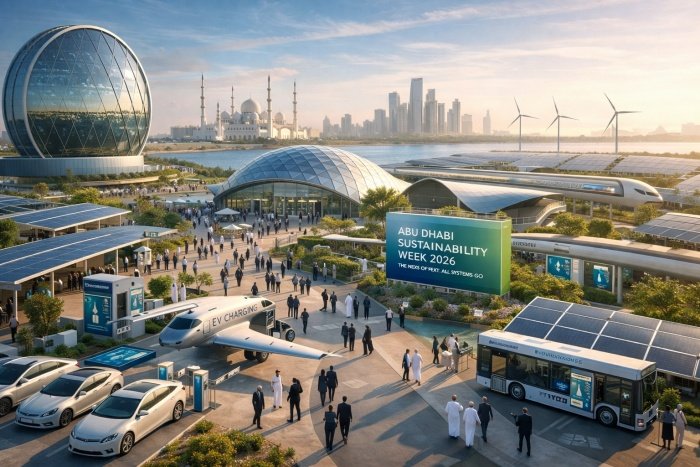

If Abu Dhabi Sustainability Week 2026 convenes world leaders below the theme The Nexus of Subsequent: All Programs Go, one actuality turns into inevitable. Journey and tourism are not a peripheral sustainability problem. It is among the strongest system integrators we’ve.
Touring is motion. It’s the demand for power, mobility infrastructure, digital platforms, finance, logistics, tradition and human conduct which can be coming collectively on a big scale. Few sectors contact so many programs on the identical time. Fewer folks nonetheless have the power to affect how these programs evolve collectively.
For too lengthy, the sustainability debate round journey has been stored in a slim framework, with the emphasis solely on decreasing emissions. Aviation targets. Resort effectivity. Compensations and Disclosures. Mandatory, however inadequate.
The angle rising from Abu Dhabi is extra bold. Sustainability is not about optimizing particular person sectors. It is about system outcomes. The query just isn’t how journey itself reduces hurt, however the way it actively strengthens the resilience and efficiency of the programs it connects.
Transportation is the place this turns into a actuality. Electrical mobility, sustainable aviation fuels, sensible ports and low-carbon logistics should not remoted improvements. They’re on the intersection of power technology, grid flexibility, digital intelligence and capital allocation. When transportation planning is disconnected, inefficiency will increase. When built-in, worth connections.
Airports are not simply gateways. They’re power hubs, mobility nodes and information platforms. Airways are more and more depending on the resilience of their energy grids, AI-enabled planning and sustainable gasoline provide chains that reach far past aviation itself. Cities that combine public transport, customer flows, cooling demand and land use from the beginning carry out higher than cities which have to revamp later.
Tourism provides one other layer of affect. Customer demand is commonly the primary actual stress take a look at for cities, revealing weaknesses in transport, water, waste and power programs sooner than any coverage doc. If poorly managed, it will increase stress. When managed effectively, it accelerates funding, innovation and system reforms that profit residents year-round.
That is why the long run just isn’t net-zero journey. It is internet optimistic journey.
A net-positive journey system contributes extra to local weather resilience, biodiversity and neighborhood well-being than it consumes. It funds renewable power and clear infrastructure. It helps credible, nature-based options. It creates livelihoods and abilities, whereas utilizing digital intelligence to clean demand, scale back waste and affect conduct at scale.
Attaining this requires a change in management mindset. Journey and transportation firms shouldn’t see themselves as remoted operators, however as managers of interconnected programs. Success can be outlined much less by particular person ESG goals and extra by collaboration, shared information, aligned incentives and long-term worth creation.
That is the place Abu Dhabi Sustainability Week performs an important position. By bringing power, finance, know-how, city design, nature and mobility into the identical dialog, it displays the truth that leaders now face. The longer term won’t be constructed by perfecting sectors individually. It will likely be constructed by connecting them intelligently.
Journey is uniquely positioned to guide this shift. It crosses boundaries by design. It connects economies, cultures and infrastructure day by day. In a world in flux, journey doesn’t solely reply to alter. It shapes it.
If we design it with intention, journey and tourism can develop into probably the most highly effective engines of a net-positive world.
By Justin Cooke