
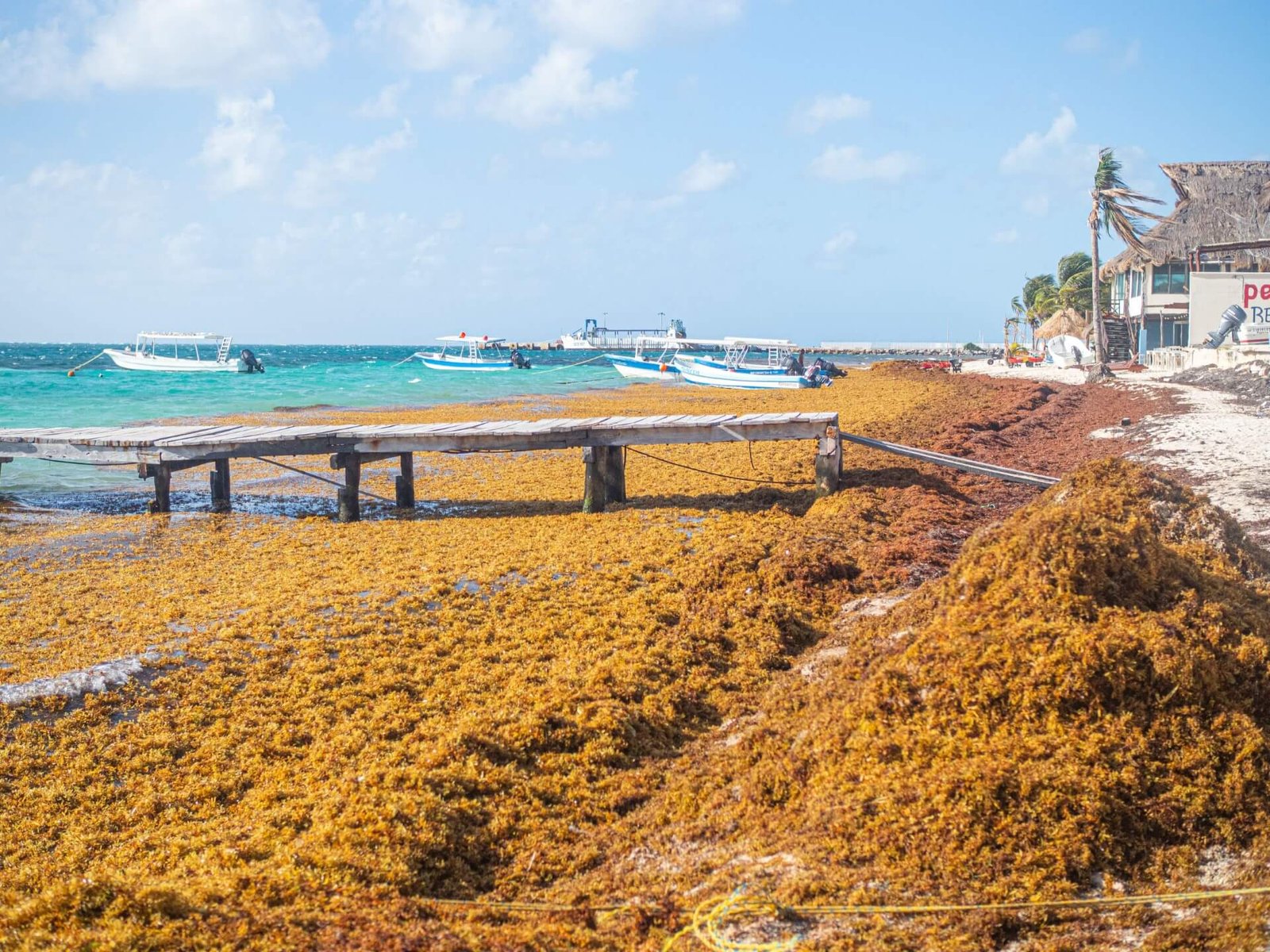

A protracted-awaited scientific examine on the well being results of sargassum on coastal staff is nearing completion, with preliminary outcomes anticipated to be launched in early 2026.
The analysis, led by the Quintana Roo Council for Humanities, Science and Know-how (Coqcyt) in collaboration with specialists from the Autonomous College of Quintana Roo (UQROO), resumed this 12 months after a season of unusually low sargassum arrivals halted progress in 2024.
Fundamental spotlight
Scientists say early findings reinforce considerations in regards to the respiratory dangers of inhaling sargassum leachate – and never simply from bodily contact with the algae.
The mission particularly targets individuals who manually accumulate sargassum, a bunch believed to have the very best long-term publicity. In response to mission director Cristopher Malpica MoralesThis 12 months’s considerable inflow of sargassum and the discharge of long-delayed funding allowed researchers to renew fieldwork in July 2025.
Respiratory issues after new findings
Researchers are assessing the results of inhaling gases and vapors launched when decomposing sargassum – often known as leachate – after observing respiratory signs in staff. Earlier research within the Caribbean have proven that the decomposition of sargassum could cause emissions hydrogen sulfide (H₂S) And ammoniaeach of which may irritate the eyes, throat and lungs. Current environmental assessments by Mexican businesses have additionally discovered fluctuating ranges of sulfur compounds alongside affected coastlines, growing the urgency of the investigation.
The UQROO group may also analyze the concentrations of heavy metals that sargassum usually absorbs because it floats throughout the Atlantic Ocean. These embrace arsenic, copper, manganese and molybdenum — components that, in excessive doses, might pose dangers to human well being and native ecosystems. Related research in Barbados and Puerto Rico have beforehand recognized elevated arsenic ranges in dried sargassum samples, elevating considerations about long-term publicity.
Price range lowered, however investigation continues
Though the primary estimates put the analysis funds at 400,000 pesossolely approx 115,000 pesos have been in the end assigned for this 12 months’s section. The vast majority of expenditure went towards transportation and discipline sampling alongside the Riviera Maya shoreline.
Malpica Morales emphasised that regardless of the lowered funds, the primary scientific targets stay on observe:
“The examine focuses on the results of inhaling sargassum leachate as a result of the researchers decided that results started to happen by inhalation relatively than direct contact. That’s what we’ll discover with this examine.”
Remaining section on the best way
Technical administration Dr. Lourdeshead of UQROO’s School of Well being Sciences, is overseeing the ultimate section of the examine. In response to Malpica Morales, the analysis group expects to finish the info evaluation by the tip of the 12 months.
What comes subsequent
It’s anticipated that the forthcoming outcomes will information new public well being suggestions for sargassus cleanup crews and function a place to begin for environmental coverage within the Mexican Caribbean. As sargassum seasons proceed to fluctuate in quantity and depth – pushed partially by warming ocean temperatures and nutrient-rich runoff – regional authorities are beneath growing strain to know and restrict the dangers to each folks and coastal ecosystems.
If you’d like, I may also create a shorter editorial model, a headline bundle or a social media abstract.