
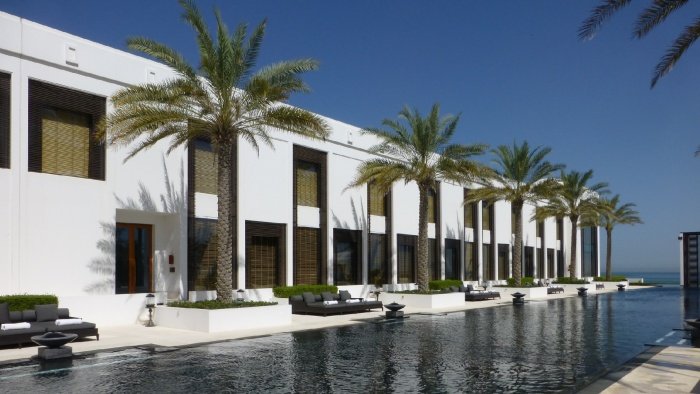

Quarterly lodge revenues in Oman rose 8.4% year-on-year to OMR85.4 million within the first quarter of 2026, says Cavendish Maxwell, main actual property consultancy and actual property advisor within the hospitality sector.
The continued income progress – achieved regardless of weaker efficiency within the hospitality sector throughout the quarter – was primarily pushed by room revenues, which rose 13% to OMR53.2 million, the corporate mentioned.
Gross sales efficiency was strongest in the beginning of the 12 months, growing by nearly 27% in January and nearly 9% in February in comparison with January and February final 12 months. March gross sales fell by 21% in comparison with March 2025.
Common room charges elevated by 15.5% year-on-year, reaching OMR57.5 within the first quarter, supported by sturdy efficiency in January (OMR58.3) and February (OMR61), representing a rise of virtually 19% and greater than 20% in comparison with the identical months final 12 months. The common room price in March 2026 of slightly below OMR50 was akin to that in March 2025.
Cavendish Maxwell’s newest evaluation of Oman’s hospitality sector reveals that inns welcomed 572,000 friends within the first quarter. Yr-over-year, January check-ins elevated by greater than 7% in comparison with January 2025, however total visitor numbers fell by slightly below 6% within the first quarter as journey plans modified as a result of Ramadan, Eid and regional disruptions.

Khalil Al Zadjali, head of Oman at Cavendish Maxwell, mentioned: “The distinction between income and room price progress and decrease visitor volumes within the first quarter reveals that Oman’s inns maintained their pricing energy regardless of decreased occupancy throughout the quarter. As well as, employment within the hospitality sector grew within the first quarter, with the labor market rising by 2.1% in comparison with the identical interval final 12 months. On the finish of March, Oman’s lodge sector employed nearly 11,300 individuals.”
Occupancy charges at Oman’s three- to five-star inns peaked at nearly 70% in January, up nearly 11% from January 2025, earlier than falling in February and March. The common occupancy price within the first quarter was simply over 56%, a lower of roughly 5% in comparison with the identical interval final 12 months.
European guests remained the highest supply marketplace for Oman within the first quarter, regardless of an 11% year-on-year decline. About 206,000 friends from Europe stayed in inns in Oman between January and March, greater than a 3rd (36%) of all guests. In second place had been Omani nationals (31%), with arrivals growing by 3% to 177,000. Subsequent got here Asian guests (15%), with different supply markets making up the remaining 18%.
Airport visitors in Oman reached 3.46 million passengers within the first quarter, down 2.4% from the identical interval final 12 months. Nonetheless, the home market remained resilient and grew by 3.5% in comparison with the primary quarter of final 12 months. With worldwide passengers making up 87% of all air vacationers, any discount will influence the airport’s total efficiency, Cavendish Maxwell mentioned.
About 430 new lodge keys had been delivered in Oman between January and March, with an additional 1,200 within the pipeline for the remainder of the 12 months, when complete provide is predicted to achieve 41,400. An additional 2,700 keys are deliberate for the subsequent two years, bringing the overall to roughly 44,100 by the tip of 2028.
Khalil Al Zadjali added: “As tourism exercise strengthens and leisure journey returns to regular within the second half of the 12 months, this extra new capability, which will probably be delivered in phases, ought to be regularly absorbed by the market.
“Trying forward, authorities measures to strengthen Oman’s tourism providing – together with improved connectivity and increasing worldwide attain by airline and journey retail partnerships – are anticipated to assist longer-term demand progress and assist create a extra diversified tourism base. We’re prone to see the influence of those initiatives materialize regularly, with near-term efficiency remaining depending on broader journey circumstances and customer sentiment.”