
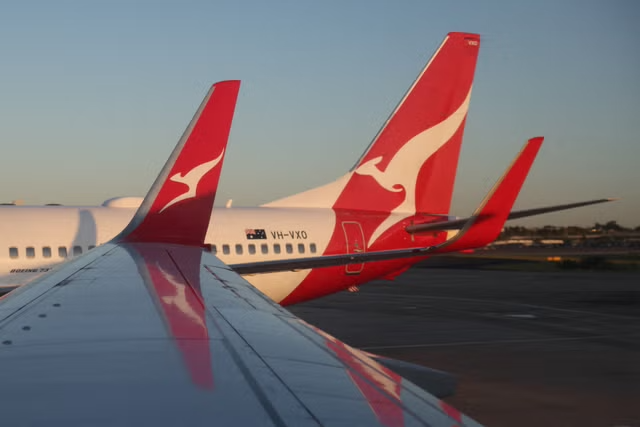
Australia’s Qantas Airways, Scandinavia’s Scandinavian Airways (SAS) and Air New Zealand introduced fare will increase on Tuesday, citing a sudden improve in jet gasoline prices linked to the escalating battle within the Center East.
The three airways mentioned the spike in vitality costs had considerably elevated working prices, forcing them to move a number of the burden on to passengers by means of greater ticket costs. Airways are significantly delicate to fluctuations in gasoline costs as a result of gasoline sometimes accounts for a good portion of working prices.
The rise in prices has been brought on by the disruption of worldwide oil markets as a result of battle within the Center East, which has induced jet gasoline costs to rise sharply in current days. In accordance with trade estimates, gasoline costs that beforehand value between $85 and $90 per barrel have risen to between $150 and $200, placing extreme strain on airline margins.
Qantas mentioned it might improve fares on worldwide routes because the airline struggles with rising gasoline prices and operational challenges associated to the battle. The Australian airline can be exploring the way it deploys plane on long-haul routes, significantly to Europe, the place demand stays excessive regardless of airspace disruptions within the area.
SAS additionally confirmed it had launched momentary value will increase, saying the velocity and magnitude of the gasoline value spike left the airline little selection however to regulate ticket costs. The Scandinavian airline mentioned the measure was obligatory to keep up steady operations throughout a interval of risky vitality markets.
In the meantime, Air New Zealand introduced fare changes to its community. The airline elevated one-way economic system fares by NZ$10 on home routes, NZ$20 on short-haul worldwide flights and NZ$90 on long-haul flights. She warned that additional adjustments might observe if gasoline costs stay excessive.
Air New Zealand additionally signaled the uncertainty dealing with the aviation trade by suspending its 2026 monetary steerage, noting that quickly altering gasoline prices make it troublesome to foretell income.
The battle has additionally led to wider challenges for airways, together with airspace restrictions and the necessity to divert flights away from components of the Center East. These adjustments have elevated flight instances and gasoline consumption, additional driving up prices throughout the trade.
Analysts say if oil costs stay excessive, extra airways all over the world might be compelled to lift fares or cut back capability to guard profitability. The developments present how geopolitical tensions can rapidly ripple by means of international journey markets, impacting each airline funds and passenger ticket costs.