
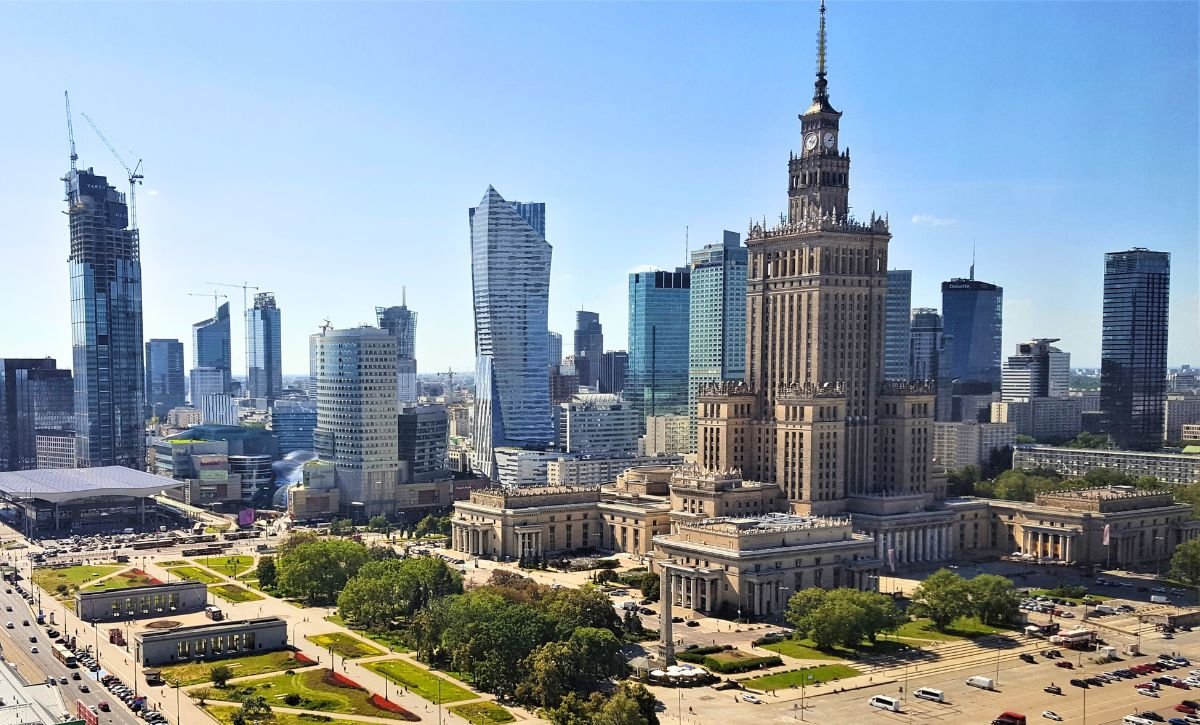

Poland has joined the world’s twenty largest economies, marking one of the dramatic financial transformations in fashionable Europebased on current reviews from The Related Press and confirmed by information from analyzes by the Worldwide Financial Fund and the World Financial institution.
As soon as fighting post-communist deficits within the early Nineties, Poland now generates greater than $1 trillion in annual output, surpassing economies resembling Switzerland. Economists more and more level to the nation as a mannequin for sustainable, inclusive development throughout the European Union.
From post-communist collapse to development champion
Poland’s financial trajectory has been formed by Constant development averaging nearly 4% per yr since becoming a member of the European Union in 2004which carried out considerably higher than the EU common. That is evident from estimates by the IMF Poland’s GDP per capita has risen to about $55,000, nearly matching that of superior economies like Japan when adjusted for the price of dwelling.
Specialists attribute this enhance to structural reforms, sturdy establishments and EU integration. Marcin Piątkowski, an economist at Kozminski College, emphasised the significance of governance, saying Poland “downloaded the establishments and the foundations of the sport” from Western economies, making certain stability and investor confidence.
Parallel, billions of euros in EU funding and entry to the interior market accelerated infrastructure improvement and commerce enlargementstrengthening Poland’s financial resilience even throughout international recessions.
Innovation and expertise drive the following part
Along with manufacturing and international funding, Poland is more and more positioning itself as a hub for superior know-how. Cities like Poznań are investing closely in synthetic intelligence and quantum computing, supported by EU-backed analysis initiatives.
Joanna Kowalska, an engineer who returned to Poland after working in the US, highlighted the shift: “We’re forward of the US in so many areas,” she mentioned, pointing to speedy progress in AI improvement and a rising sense of objective amongst professionals returning residence.
This pattern is consistent with broader traits Reports from the European Commission noticing a rise in extremely expert employees and a powerful training systemwith nearly half of younger Poles having obtained a college diploma – one of many highest figures in Europe.
Entrepreneurship and industrial transformation
Poland’s non-public sector has additionally performed a vital function. Corporations like Solaris, a number one producer of electrical buses, illustrate how The early adoption of inexperienced applied sciences has positioned Polish firms on the forefront of the European vitality transition.
Business analysts notice that Poland’s willingness to take calculated dangers – particularly in rising sectors resembling electrical mobility – has allowed home firms to compete with bigger Western counterparts.
Challenges for the long run: demography and inequality
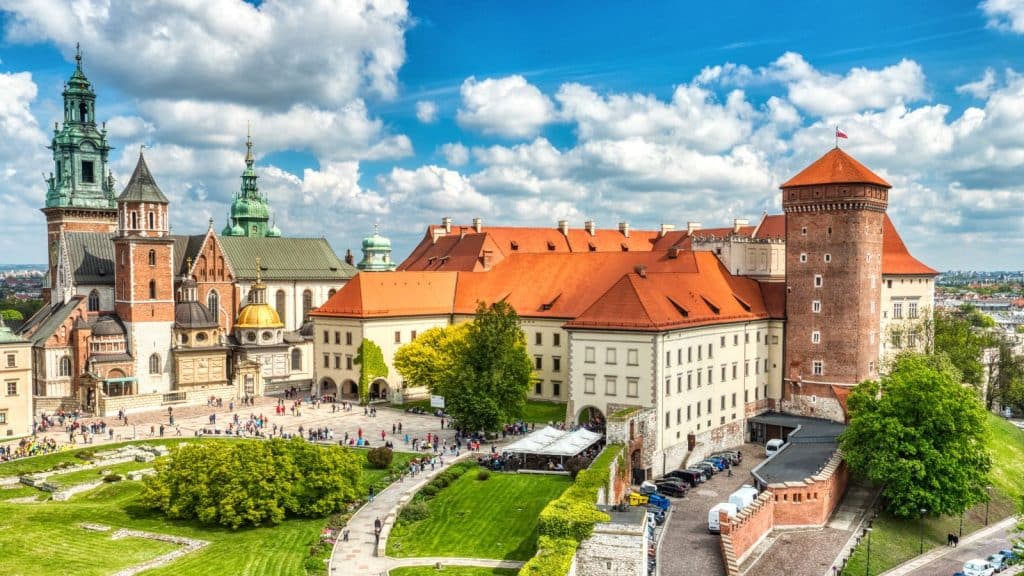
Regardless of its success, Poland faces structural challenges. An getting old inhabitants and a declining beginning fee threaten the long-term labor providewhereas wage ranges nonetheless lag behind these of Western Europe.
As well as, economists warn of persistent regional inequalities and housing affordability issues, which primarily have an effect on youthful generations. Migration is more and more seen as a part of the answer, with hundreds of thousands of Ukrainian employees contributing to the financial system since 2022.
Poznań Mayor Jacek Jaśkowiak underlined the following stage of improvement, stating that “now’s the time to start out such superior actions right here,” emphasizing investments in innovation and better training.
A mannequin for rising economies
Poland’s rise is now being intently studied by policymakers worldwide. The mixture of institutional reforms, EU integration and human capital improvement supplies a blueprint for different rising economies searching for long-term development.
As international financial energy steadily shifts, Poland’s rise alerts not simply nationwide success however a broader rebalancing inside Europe itself.
Sources
- The Related Press (through NBC News)
- Worldwide Financial Fund (IMF) – World Financial Outlook Database (GDP, per capita information)
- World Financial institution – Economic overview of Poland
- European Fee – Poland – Financial and funding reviews
- OECD – Financial research: Poland
- Reuters – Macroeconomic context and development comparisons within the EU