
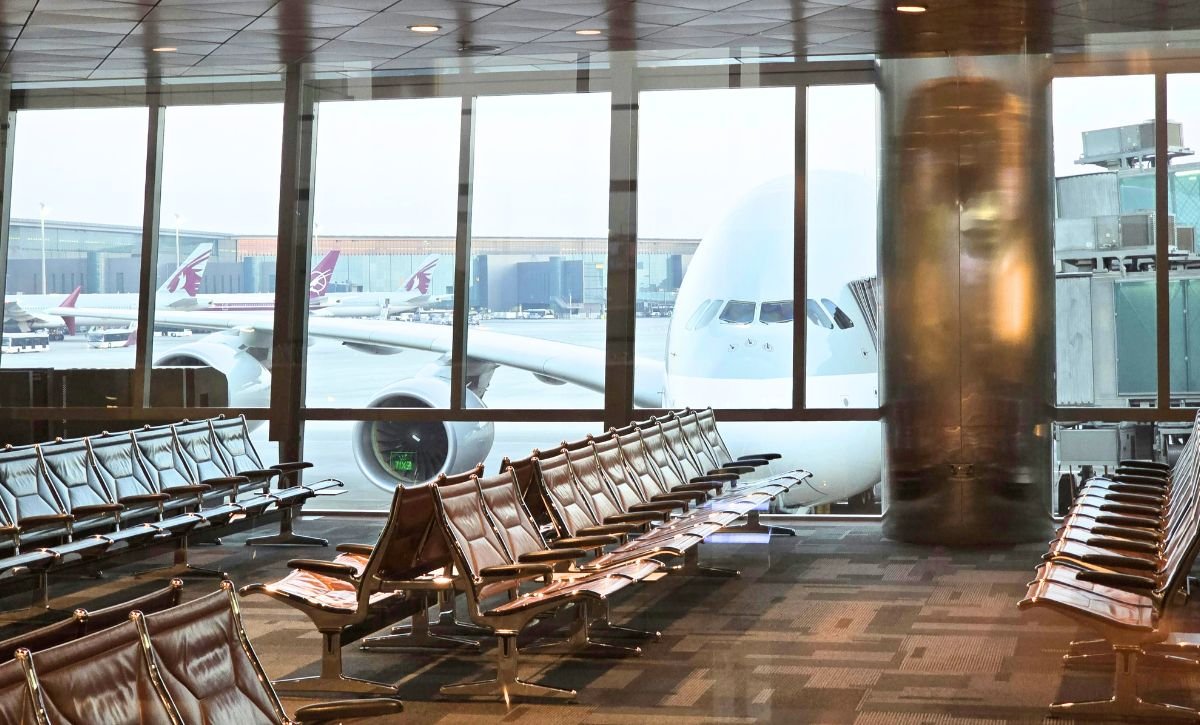

Sri Lanka has submitted a proposal to transform the underutilized Mattala Rajapaksa Worldwide Airport into an emergency hub for Emirates and Qatar Airways, as ongoing airspace instability within the Center East continues to disrupt world aviation networks.
The initiative emphasizes the strategic significance of different hubs to take care of long-distance connections between Europe, Asia, Africa and Australia.
The proposal shifts the main focus away from the nation’s foremost gateway, Bandaranaike Worldwide Airport in Colombo, and as an alternative emphasizes Mattala’s unused capability and favorable geographical location alongside key east-west air corridors.
A ‘ghost airport’ with untapped potential
Opened in 2013, Mattala Rajapaksa Worldwide Airport is designed to accommodate massive plane, together with Airbus A380s. Nonetheless, the airport has remained largely inactive and has developed a repute as a ‘ghost airport’. However, aviation analysts are taking discover the low congestion, accessible slots and current infrastructure present a uncommon alternative for fast operational scale-up.
Sri Lankan authorities have initiated preliminary discussions with each Emirates and Qatar Airways to discover the opportunity of relocating sure operations to Mattala. The airport’s location in southern Sri Lanka locations it alongside main flight routes within the Indian Ocean, making it appropriate for transit operations between western and jap markets.
“The airport has accessible capability and a strategic location that would help worldwide transit operations,Officers acquainted with the discussions indicated, underscoring its potential function in limiting disruptions.
Disruptions within the Center East are inflicting strategic shifts

The proposal comes at a time when airways throughout the Center East face rising uncertainty as a consequence of airspace restrictions and geopolitical tensions. Gulf carriers equivalent to Emirates and Qatar Airways rely closely on hub-and-spoke fashions in Dubai and Doha.
Any long-term disruption in these main hubs might have cascading results on world journey networksprompting airways to discover contingency plans. Business observers recommend diversification of working bases might grow to be essential if instability persists.
Mattala’s distance from conflict-prone areas additional enhances its enchantment as a backup location, offering a stage of operational reliability that’s more and more useful in in the present day’s risky surroundings.
Operational and infrastructure challenges
Regardless of the advantages, vital boundaries nonetheless stay. Organising a totally practical hub requires extra than simply runway capability. Airways ought to become involved floor dealing with providers, upkeep services, catering programs and skilled personnelall of that are at present restricted at Mattala.
As well as, the encompassing area doesn’t have adequate resort capability and transportation infrastructure to help massive numbers of transit passengers. These logistics constraints might forestall airways from making short-term investments until the disruptions grow to be long-lasting.
Specialists are taking discover the price and complexity of repositioning plane, crew and help programs Within the absence of sustained operational want, the advantages might outweigh the advantages.
Financial alternatives for Sri Lanka

For Sri Lanka, the proposal represents a possible financial enhance. Elevated airline exercise might enhance tourism, generate employment and enhance regional growth within the southern areas of the nation.
Tapping right into a billion-dollar underutilized asset might assist offset fluctuations in tourism and strengthen aviation-related income streamsparticularly as world journey patterns proceed to evolve.
Though the idea is strategically sound, its implementation stays unsure. Airways usually want long-term stability earlier than making main operational adjustments. Nonetheless, if disruptions within the Center East proceed, Sri Lanka’s proposal might acquire momentum as a part of a broader shift towards extra resilient and diversified world aviation networks.
Sources: