

The Mexican Caribbean is as soon as once more bracing for a doubtlessly critical sargassum invasion.
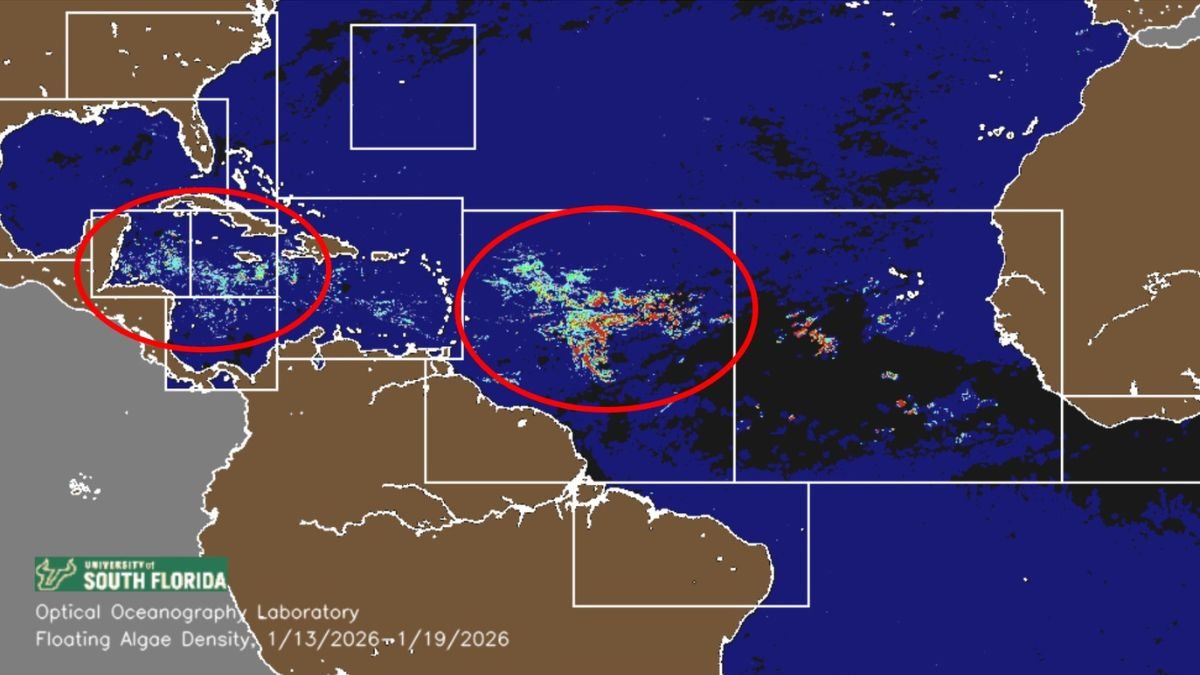
As reported by Mexico Information Every day, satellite images from the Optical Oceanography Laboratory from the College of Florida has found round 7 million tons of the seaweed presently floating from the Atlantic Ocean to the Gulf of Mexico and the Caribbean.
The unusually early arrival and sheer quantity of the floating macroalgae are elevating issues amongst environmentalists, tourism authorities and native communities alongside the Quintana Roo coast.
Early arrival raises purple flags
Lately, sargassum has sometimes arrived on the coast of Mexico between April and Might.
This yr although FB photo reports show it the yellow-brown seaweed has appeared early on chosen seashores Xcalak, Mahahual, Cozumel, Tulum, Puerto Morelos and Playa del Carmenprompting native authorities to arrange for what might be one other intense yr.

“The expectation is that this season can be as intense as 2025,” he says Esteban Jesus Amaro Mauriciohead of the Sargassum monitoring network in QuintanaRoo. “Though we’re solely now seeing the primary indicators, the dimensions of what’s to return is unprecedented.”
Final yr, greater than 73,000 tons of sargassum have been collected from seashores within the area, severely impacting native tourism and coastal ecosystems.
7 million tons: not a strong mass, however nonetheless a risk
Though the determine of seven million tons might sound alarming, scientists emphasize that it isn’t one big quantity. In response to Amaro, the macroalgae are positioned in giant floating spots, that are due to this fact tough to detect heavy cloud cowl attributable to a current chilly entrance.
“Satellite tv for pc pictures present intensive however scattered formations of sargassum,” Amaro defined. “These giant areas pose a critical environmental and financial problem as soon as they attain land.”
Necessary seashores in peril
The Gulf and Caribbean Oceanographic Institute of the Mexican Navy has recognized Puerto Morelos and Playa del Carmen as possible hotspots for important sargassum accumulation.
In a January 10 bulletin, the institute predicted that the biggest cluster is presently weighing about 85 tonswhich may severely have an effect on these seashores inside days.
Financial and environmental prices

It’s estimated that accommodations and native governments within the area spend yearly $150 million to fight the sargassum disaster, masking all the things from guide seashore cleanups to sea partitions and offshore containment.
Along with the financial burden, the seaweed poses well being dangers. As soon as it washes ashore and begins to decompose, sargassum emits hydrogen sulfidea fuel with a powerful odor much like rotten eggs.
Extended publicity can irritate the eyes and respiratory tract, particularly in weak folks akin to kids and the aged.
A broader maritime problem
Regardless of its problematic presence on land, Sargassum performs an necessary ecological position within the ocean. It floats within the Atlantic Ocean and serves as a nursery and habitat for marine life, together with fish, turtles and birds. Nonetheless, their migration towards the coast disrupts these ecosystems and overwhelms coastal areas which might be ill-equipped to handle the amount.
In response to the disaster Mexican authorities declared sargassum a nationwide fish useful resource in 2025permitting specifically outfitted ships to reap the seaweed at sea earlier than it reaches shore. This determination marked a shift in technique, transferring from reactive cleanup to proactive administration.
Steady monitoring and regional cooperation
The Sargassum Monitoring Community and scientific establishments such because the College of South Florida’s Optical Oceanography Lab proceed to observe sargassum actions in actual time utilizing satellite tv for pc expertise. Forecasts are up to date weekly to assist authorities and seashore companies plan mitigation efforts.
In the meantime, native residents, environmental teams and enterprise house owners are calling for this coverage extra federal assist, higher waste administration infrastructure and sustainable tourism practices to cut back the long-term results of sargassum on Mexico’s Caribbean coast.
Just like the The 2026 sargassum season will begin a lot sooner than anticipatedIt’s clear that the combat towards this invasive seaweed will take time higher coordination between scientists, the non-public sector and authorities businesses– each domestically and internationally.